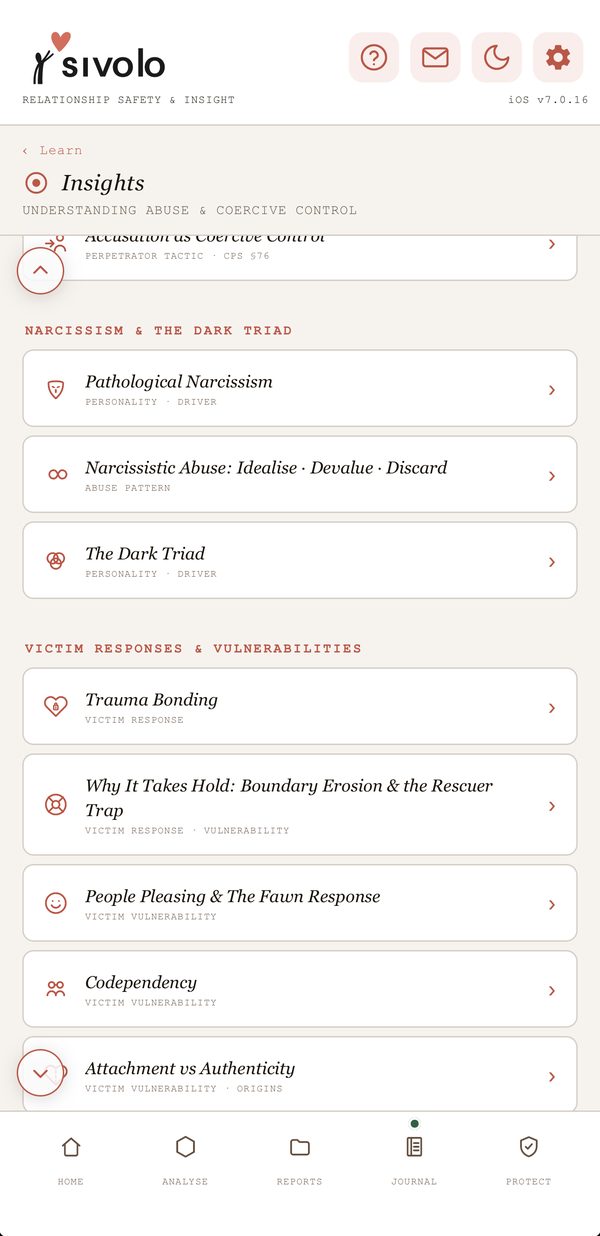
Putting a name to what happened is often the first step. Everything Sivolo can teach you lives in Learn: free, curated, and written in plain language.
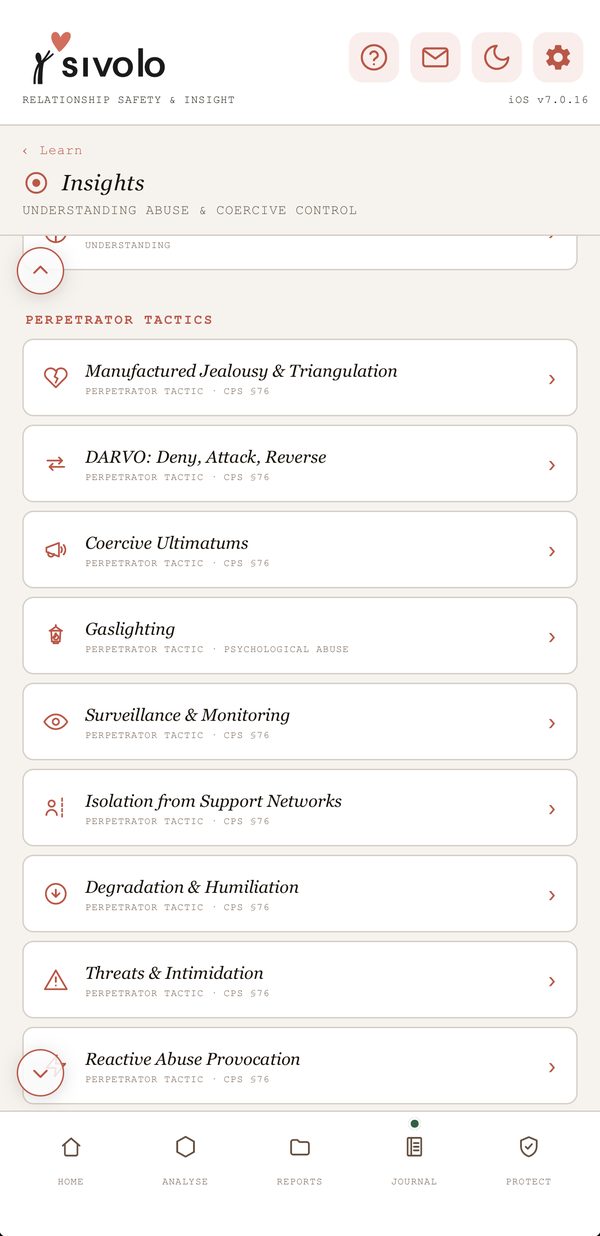
Each card explains one part of coercive control: what it means, why it’s harmful, and the psychology behind it. The content is drawn from licensed psychologists, counsellors and UK government guidance, with its sources listed.


Actual app screens · example data
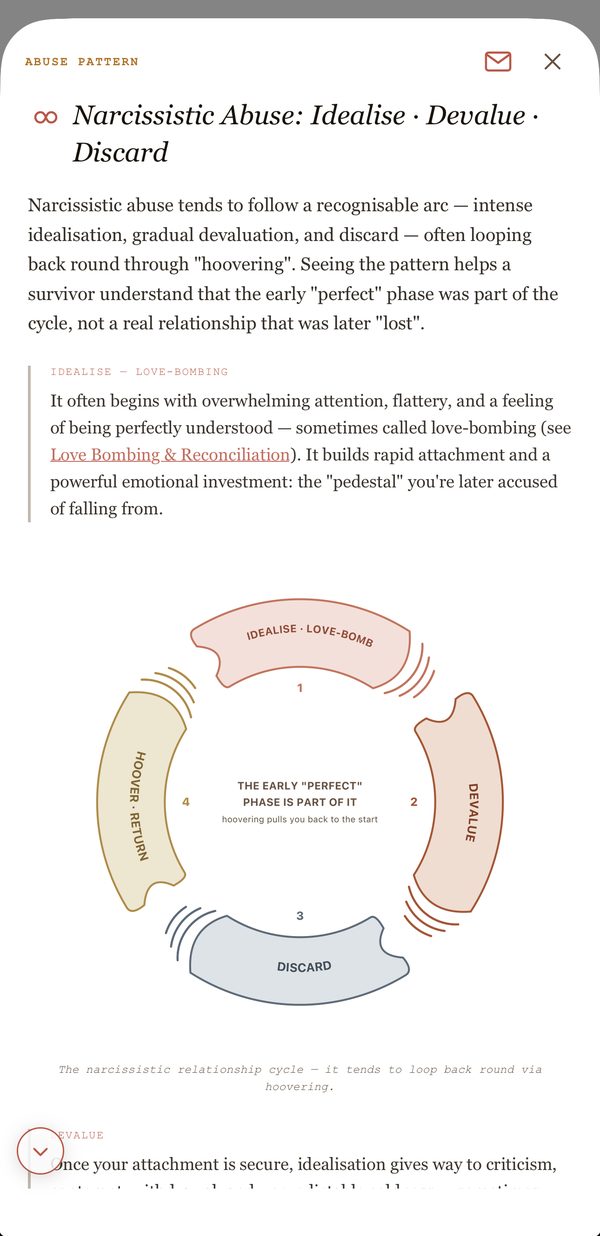
Insight cards are linked from the findings in your report, so when Sivolo names a pattern you can read what it means there and then.


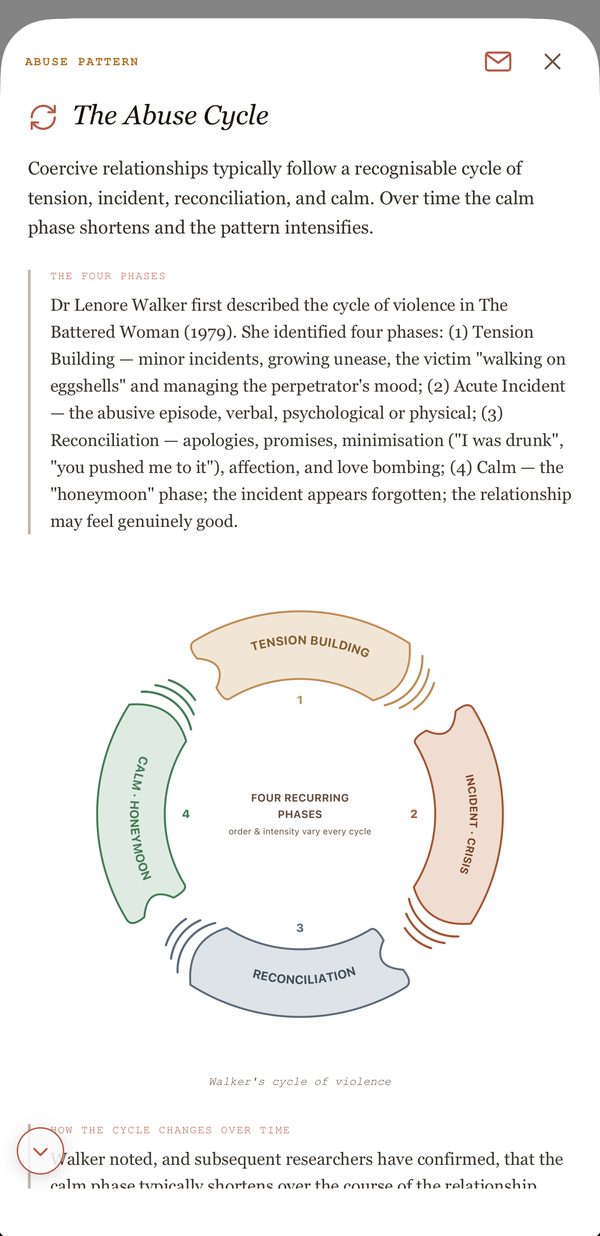
Actual app screens · example data
Police and courts deal in behaviour, not personality: having a personality disorder isn’t a crime, so you won’t hear “narcissistic abuse” in a charge. But many of the behaviours people describe as narcissistic abuse are the same ones CPS guidance describes as controlling or coercive, and for many people the pattern is what finally explains what they have been living through.


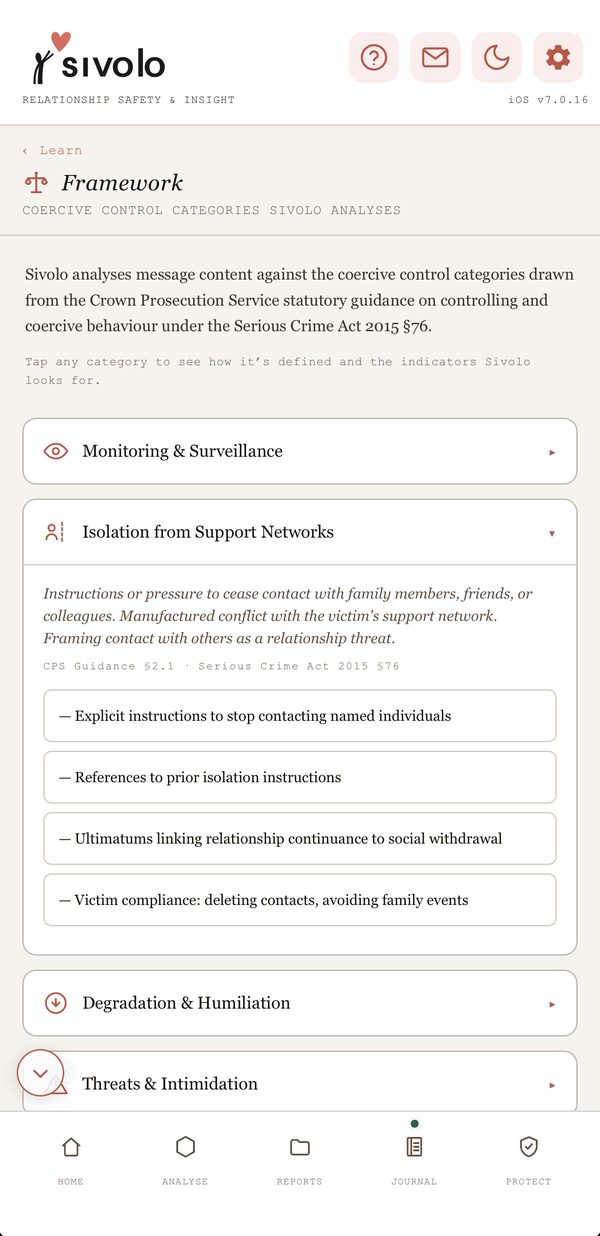
Actual app screens
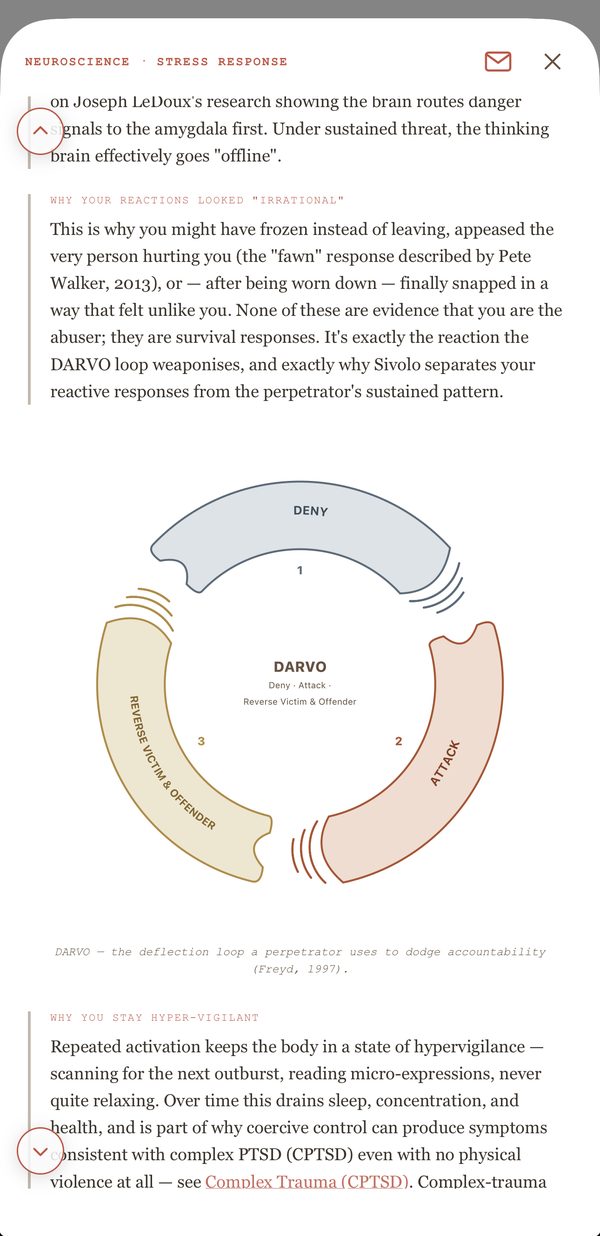
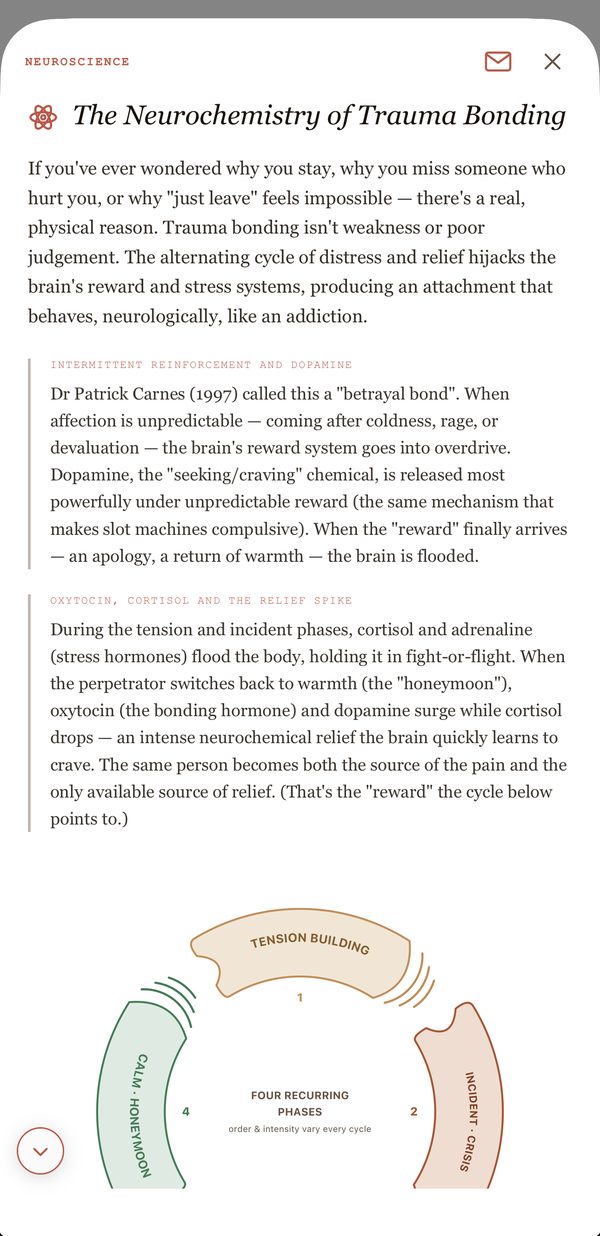
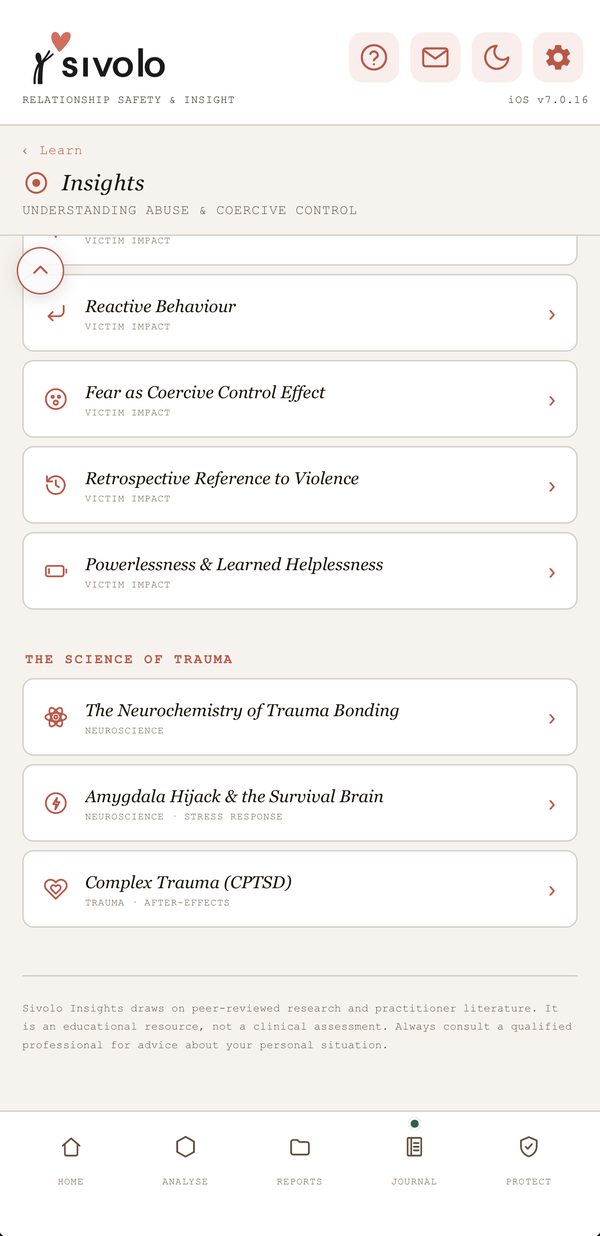
Some cards go deeper, into what coercive control does to the mind and body, so you can see that the way you reacted made sense.


Actual app screens
Learn is included, with no analysis needed. Start here if you’re not sure what you’re looking at yet.
Find out more →Your answers to the self-recognition Q&A stay on your phone. Sivolo doesn’t send them anywhere.
Find out more →The framework follows the CPS statutory guidance on controlling or coercive behaviour, the same reference point police and prosecutors use.
Find out more →Learn is free on every account, before you analyse anything.